
J Callander Unveils Powerful New Single “The Little People” from Album Shadows in the Shade
Outlaw space rock with a conscience, forged in Dunedin, New Zealand.
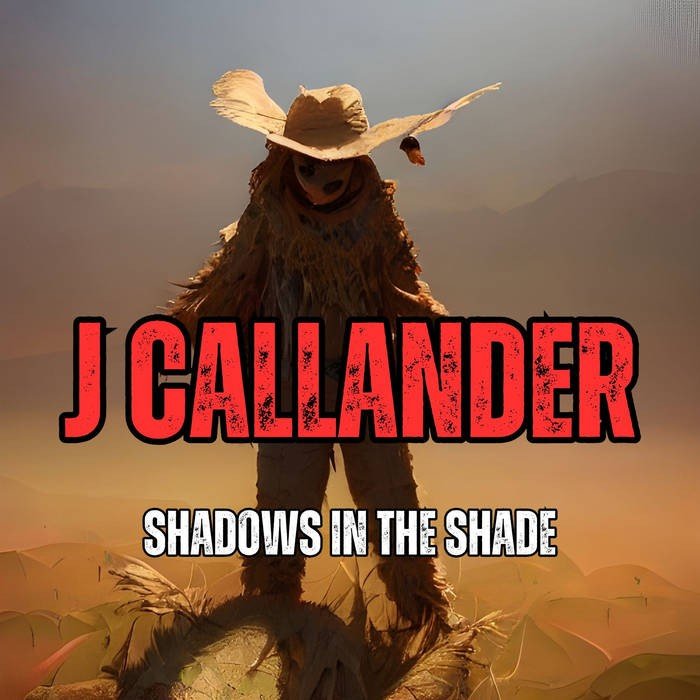
DUNEDIN, NZ — March 6, 2026 — Emerging from the southern reaches of New Zealand’s music scene, J Callander returns with a stirring and unflinching new single, “The Little People,” a centerpiece track from his latest album, Shadows in the Shade. Self-released and sonically expansive, the record blends gritty rock textures with poetic lyricism, staking its claim in a genre Callander himself dubs outlaw space rock.
Written and composed by Jeremy Callander, “The Little People” began, fittingly, by accident—an opening riff discovered in a quiet moment in his home studio. What followed was a rapid creative surge, resulting in a song that feels both immediate and timeless. Though not explicitly about the COVID era, its themes are undeniably shaped by it: a meditation on power, memory, and the enduring resilience of ordinary people in the shadow of leadership and legacy.
Driven by a brooding intensity and anchored in evocative storytelling, the track channels the spirit of artists such as Midnight Oil, Alice in Chains, and Chris Cornell, while also echoing the introspective lyricism of Simon & Garfunkel and the raw honesty of Johnny Cash. The influence of New Zealand’s own Derek Lind is particularly notable, lending a local authenticity to Callander’s global perspective.
Lyrically, “The Little People” is a haunting tribute to the nameless masses—the builders, the sufferers, the forgotten. With lines like “Our blood built the roads, the walls, the temples… but we go on”, Callander paints a stark portrait of human endurance in the face of systemic neglect. It’s a song that resonates deeply in an era where history is often written from the top down, leaving the voices of the many unheard.
The album Shadows in the Shade benefits from the expert touch of Oscar-nominated and two-time Grammy-nominated engineer Aaron Glemboski of Red Beard Productions, whose mixing and mastering elevate the record’s atmospheric depth and sonic clarity.
Artist on the Rise
J Callander’s journey is one of persistence and rediscovery. After spending his twenties immersed in Dunedin’s local music scene—writing, recording, and touring—Callander stepped away to focus on family and career. But music, as it often does, called him back. Two decades later, he returns not as a newcomer, but as a seasoned storyteller with a renewed voice.
Recent milestones include a seven-date tour across New Zealand’s South Island in winter 2025, the recording of an upcoming acoustic album currently in production, and the completion of material for a third full-length project slated to begin recording later this year.
By day, Callander balances the responsibilities of everyday life. By night, he crafts songs that speak to the shared human experience—raw, reflective, and unapologetically honest.
About J Callander
J Callander is the musical and lyrical evolution of a lifelong listener. Raised on the sounds of Bob Dylan and Simon & Garfunkel, he later embraced the raw energy of early ’90s rock icons like Pearl Jam and Soundgarden. Over time, his influences expanded to include the storytelling mastery of Mark Knopfler and Johnny Cash.
Now based in Dunedin, Callander continues to create music that bridges generations and genres—rooted in experience, yet always reaching outward. Shadows in the Shade marks not just a return, but a statement: the voice of “the little people” is still here, and it refuses to be forgotten.
Listen & Connect
Shadows in the Shade and “The Little People” are available now across major streaming platforms.
“The Little People” Lyrics:
They build no burial mounds for us
They sing no songs, they make no fuss
Our lives and names forgotten, our stories lost
No matter what we gave or what it cost
We are the faceless Great Unwashed
We suffer the weight, we carry the cross
We bear the burdens that bring honours to the faces
Of the vultures who’d never trade our places
Our blood built the roads, the walls, the temples
A cold memory long gone
Our bones picked clean by rats who pose as eagles
But we go on
We are the little people
Only the moon and the stars know our names
They’ve watched over the wars, the famines, the floods and the flames
The passing seasons, the cold and dark of winter
And the memories are a tree grown black and bitter
Our blood built the roads, the walls, the temples
In cold memories long gone
Our bones picked clean by rats disguised as eagles
But we go on
We are the little people
Our hopes and dreams have amounted to nought
Despite all the promises and all of the lies we’re that taught
But our backs grow strong from the bark and the blackened root
Of the bitter tree that bears a crimson fruit
Our blood built the roads, the walls, the temples
A cold memory long gone
Our blood drained clear by rats disguised as eagles
But we go on
We are the little people
Our bones built the empires and the temples
In cold memories long gone
Our flesh and bones devoured by rats proclaimed as eagles
But we go on
In the dust where we belong
Review: J Callander — “The Little People”
J Callander’s “The Little People” is a slow-burning, emotionally charged statement piece that cuts deeper with each listen. Positioned within his album Shadows in the Shade, the track stands as both a protest song and a meditation on legacy—one that feels grounded in history yet uncomfortably relevant in the present day.
From its opening moments, the song establishes a brooding atmosphere. What began as an accidental riff in Callander’s studio evolves into a commanding musical backbone—steady, deliberate, and weighty. There’s a raw, unpolished authenticity in the arrangement that suits the song’s message perfectly. Rather than relying on overproduction, Callander leans into restraint, allowing the instrumentation to breathe and the narrative to take center stage.
Stylistically, the track carries echoes of Midnight Oil in its political undercurrent and sense of urgency, while the sludgy, introspective textures recall Alice in Chains. There are also shades of Chris Cornell in the vocal delivery—particularly in the way Callander balances grit with vulnerability. Yet, despite these comparisons, “The Little People” never feels derivative. Instead, it exists in its own space—what Callander describes as outlaw space rock—a fitting label for a sound that feels both grounded and expansive.
Lyrically, this is where the song truly asserts its power. “The Little People” is an unflinching tribute to the anonymous masses—the laborers, the survivors, the forgotten—whose contributions shape history but whose names are rarely remembered. Lines like “They build no burial mounds for us / They sing no songs, they make no fuss” immediately set the tone: stark, poetic, and quietly devastating.
As the song unfolds, the imagery becomes increasingly vivid and confrontational. The recurring motif of “rats disguised as eagles” is particularly striking—a biting metaphor for leadership that feeds off the sacrifices of others while cloaking itself in nobility. It’s a bold lyrical choice, but one that never feels heavy-handed. Instead, it underscores the song’s central thesis: that power is fleeting, but the burden of its consequences is borne by the many.
There’s also a timeless quality to the writing. Though influenced by the societal aftershocks of the COVID-19 era, the song resists being tied to any single moment. It speaks just as easily to ancient empires as it does to modern political systems, reinforcing the cyclical nature of history and the enduring role of “the little people” within it.
Vocally, Callander delivers the song with a measured intensity. He doesn’t overreach; instead, he allows the emotion to simmer beneath the surface, which ultimately makes the performance more impactful. There’s a quiet defiance in his tone—less a shout of rebellion and more a weary, knowing acknowledgment of truth.
The production, handled by Aaron Glemboski of Red Beard Productions, adds a subtle polish without stripping away the song’s grit. The mix gives space to each element while maintaining a cohesive, immersive soundscape. It’s a careful balance—one that enhances rather than distracts from the storytelling.
What makes “The Little People” particularly compelling is its refusal to offer easy resolution. There’s no triumphant climax, no false sense of closure. Instead, the song ends much as it begins—with the enduring presence of those who persist, unrecognized but unbroken. “But we go on” becomes less a lyric and more a quiet mantra, echoing long after the music fades.
In a musical landscape often dominated by immediacy and surface-level themes, “The Little People” stands apart as something more substantial. It demands attention, rewards reflection, and lingers in the mind. For listeners willing to engage with its depth, it’s not just a song—it’s a statement.
Verdict: A haunting, thought-provoking track that blends poetic lyricism with atmospheric rock to deliver a message that feels both deeply personal and universally resonant.
– Doug “The Rawk Dawg” CEO Wild Dogs Radio